Higher Diploma in Music Production for Creative Industries

Introduction
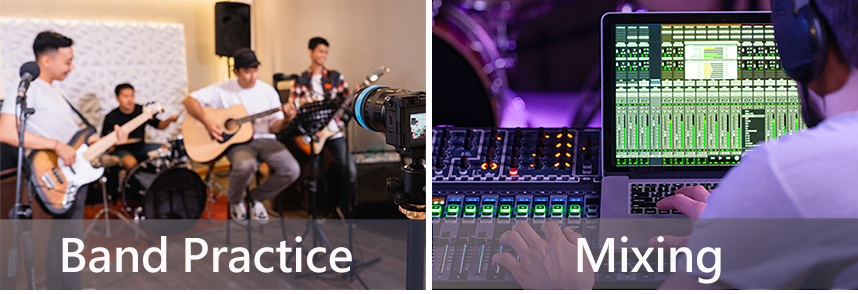
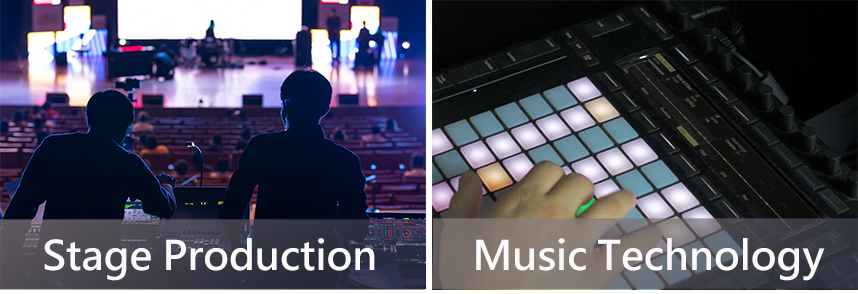
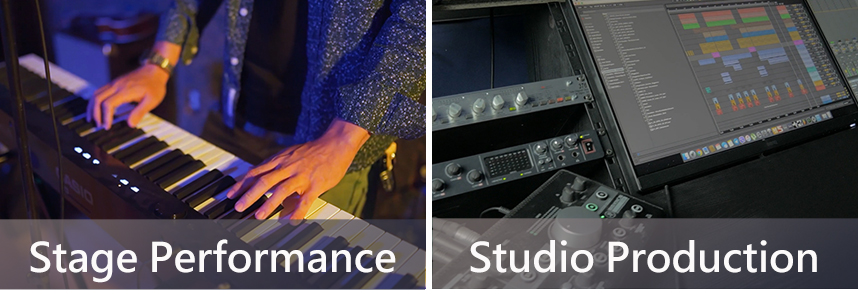
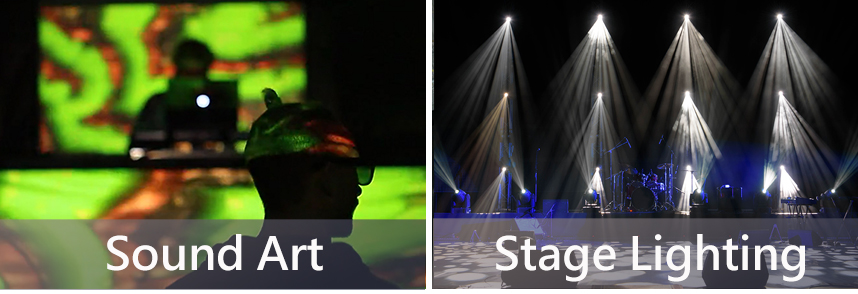
This unique sub-degree program combines music composition, performance, stage production, and sound art, developing students' skills across a diverse spectrum of musical styles, including local, J-Pop, K-Pop, Western pop, electronic music, game and film soundtracks, sound design, etc. Through comprehensive music and performing arts, stage production talent training, development and creativity enhancement. The programme nurtures new talent within the local music industry and contributes to Hong Kong’s development as a creative hub in Asia. This programme is accessible to students with varying degrees of musical experience, from beginners to those with prior musical training.
 
 
Programme Enquiry: WhatsApp
Contents

Programme Objectives

Professional expertise is essential in the entertainment industry, including music and vocal performance. ‘Higher Diploma in Music Production for Creative Industries’ at HKCT is designed to develop skilled professionals for Hong Kong's music and performance industries. Graduates can pursue careers in composing, arranging, mixing, stage lighting engineering, and other related fields, contributing to the growth and development of Hong Kong's music industry.

Programme Features

This programme focuses on a combined approach of theory and practice, emphasizing the development of musical creativity, production technology, and teamwork skills. Students learn comprehensively, starting from the fundamentals, to prepare them for careers in the music and creative industries. The curriculum of this music programme covers six key areas: modern music theory application, studio music creation and production, music performance, music stage production and engineering, music technology and sound design art.

  • 【Comprehensive Music Programme】In addition to basic music theory, mixing and post-production, innovative composition and arrangement skills, and contemporary music performance skills, the programme also includes music stage production skills, electronic music, sound design, world ethnic music, etc. that are rarely covered in similar programmes
  • 【International Perspective】Our internationally qualified tutors provides music training aligned with global standards, fostering students’ understanding of the international and industry perspectives
  • 【Industry-Grade Software Support】It provides the latest software and hardware technologies, including contemporary music production software such as Logic Pro, ProTools and Ableton Live, as well as various audio plug-ins such as Autotune
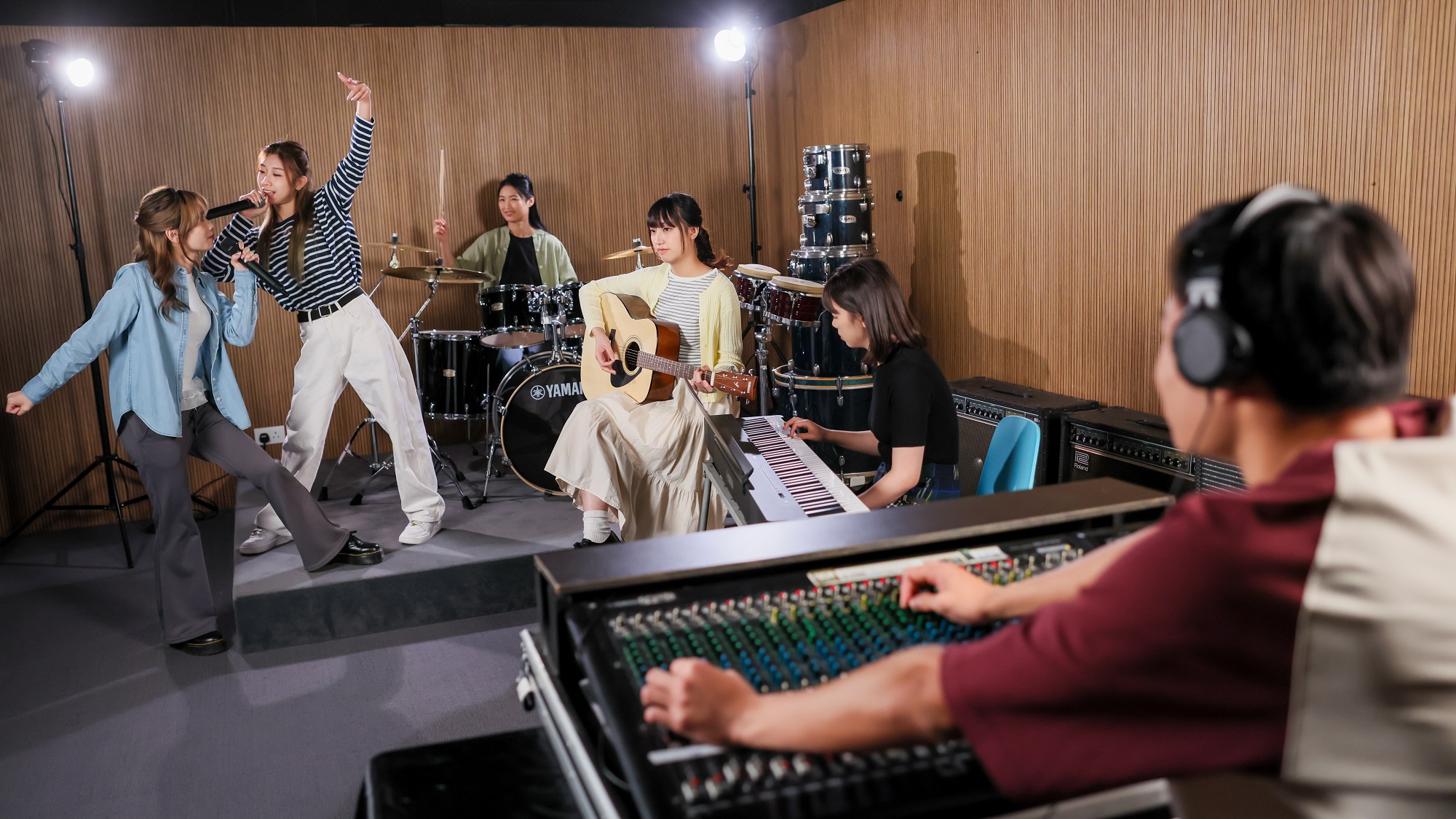
  • 【Professional Equipment】Studying through the on-campus computer labs, recording studios and variety halls that simulate the specifications of professional performance venues in Hong Kong, students will also study off-campus at the Shaw Creative Hub
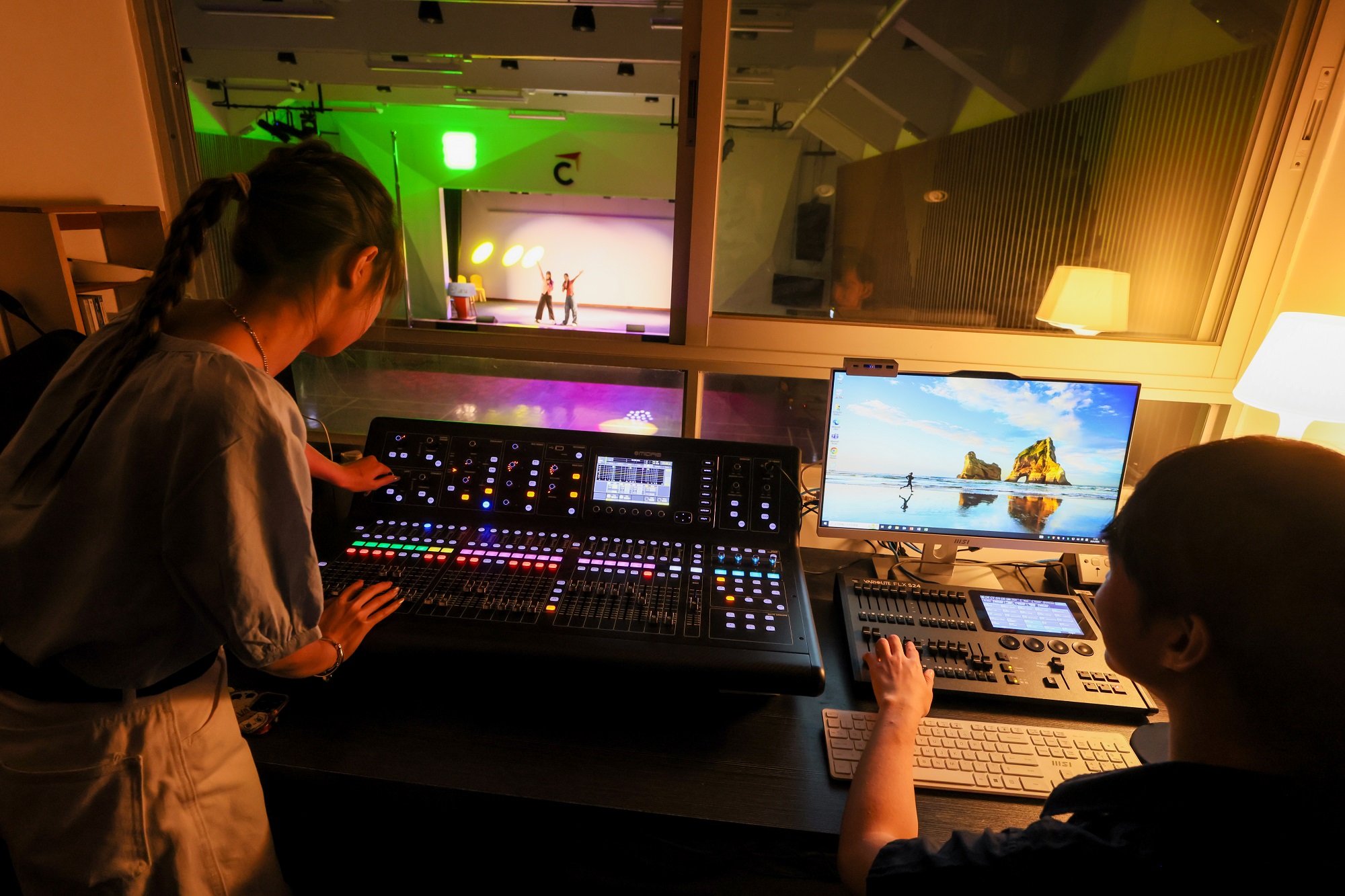
  • 【Stage Production Skills Development】Essential skills in stage management, sound, and lighting design for musical performances are developed through this programme. Students gain practical experience by participating in a variety of school music events and performance workshops, including the graduation concert, enhancing their ability to contribute effectively to live productions
  • 【Industry Insights】Students can learn from leading industry professionals and gain firsthand experience through site visits to professional recording studios, music and media production and entertainment companies, performance venues, etc. for on-site inspections to communicate with industry professionals and help students understand industry operations and market trends to broaden your horizons
  • 【Internship】100 hours of internship in a local professional music company, allowing students to collaborate with industry professionals and applying the skills learned in the music program to gain valuable practical experience
  • 【Digital Arts Synergy】This program integrates digital creativity across music, visual arts, and sound art, encompassing art technology, entertainment, and multimedia. The curriculum emphasizes music technology application and sound art creation, enabling students to develop a diverse range of skills, including sound effects creation, instrument and music software design, and digital music production. By combining practical skills development with a focus on creative application, the program prepares graduates to apply their musical talents within the cultural and creative industries and the commercial sector, gaining a competitive edge in the job market and enhancing their employability
  • 【Build your Portofolio】The design of subject assignments takes into consideration the building of personal music portfolio for students, so as to prepare them for future studies, whether international or local, or to join the creative industry

Featured Modules

  • Modern Music Theory Application
  • Studio Music Creation and Production
  • Music Performance
  • Music Stage Production and Engineering
  • Music Technology and Sound Design Art
  • Graduation Project


Articulation Path

Graduates can articulate to the following Bachelor programmes:

  • The University of Hong Kong - Bachelor of Arts (Honours) (Humanities and Digital Technology)
  • The Chinese University of Hong Kong - Bachelor of Music with Honors
  • City University of Hong Kong - Bachelor of Arts (Honours) (Creative Media)
  • City University of Hong Kong - Bachelor of Science (Hons) (Creative Media)
  • City University of Hong Kong - Bachelor of Arts and Science (Honours) (New Media)
  • The Hong Kong Polytechnic University - Bachelor of Design (Honours) (Media Design)
  • Hong Kong Baptist University - Bachelor of Music (Honours) (Creative Industries)
  • Hong Kong Baptist University - Bachelor of Arts with Honors (Arts and Technology)
  • The Education University of Hong Kong - Bachelor of Arts (Hons) (Creative Arts and Culture)
  • The Education University of Hong Kong - Bachelor of Arts (Honours) (Creative Arts Culture and Education) (Music)

Others

  • Bachelor's degree programs in cultural studies or management offered by other local tertiary institutions
  • Other overseas music and music-related bachelor's degree programs

 
Career Prospects

Graduates could apply for positions of Studio Audio Mixing Engineer, Back Stage Sound and Lighting Engineer, Pop music performer, Arranger, Composer, Sound Artist, Music and Audio Technology Inventor / Researcher, Sound Designer, Composer for Motion Graphics, Musicologist / Ethnomusicologist, etc.

The programme has a professional teaching team with international perspectives. The tutors have music qualifications awarded by internationally renowned music learning institutions, including the Royal Academy of Music (ABRSM), Trinity College London, and Berklee College of Music in the United States. etc., to ensure that students receive international benchmark music training. Additionally, guest lecturers from industry experts will be invited to share their profound industry insights and practical skills with the students 

Mode of Study

Full Time

Teaching Mode

Face to face

Commencement of Study

September 2026

Duration

2 Years

Location
Entry Requirements
  1. Attained Level 2 in 5 HKDSE subjects1, including Chinese Language2 and English Language, and the performance in Applied Learning subjects would be considered on a case-by-case basis; or
  2. Pass in 1 A-Level or 2 AS-Level subjects in HKALE; and 5 passes in HKCEE including Chinese Language and English Language; or 
  3. Holder of Diploma Yi Jin/ Diploma of Applied Education; or
  4. Holder of Diploma for Tertiary Studies; or
  5. Holder of Pre-Associate Degree; or
  6. Holder of Diploma and 
    - in the relevant discipline at QF Level 3 with a total learning size of normally 150 QF Credits; and 
    - learning contents covering Chinese and English Languages; or
  7. Aged 21 or above with 1 year working experience; or
  8. Equivalent qualifications; 
    AND
  9. Pass the admission interview.

    1 With effective from 2024/25, 'Attained' in 'Citizenship and Social Development' (equivalent to 'Level 2' for the HKDSE subject 'Liberal Studies' before 2024/25), or the attainment of 'Level 2' in Mathematics Extended Part (Module 1 or Module 2) is also recognised as meeting the general entry requirements.
    2 'Attained' level of Applied Learning Chinese (for non-Chinese speaking students) is accepted as Chinese Language qualification for the admission, but it is not considered as an elective subject.

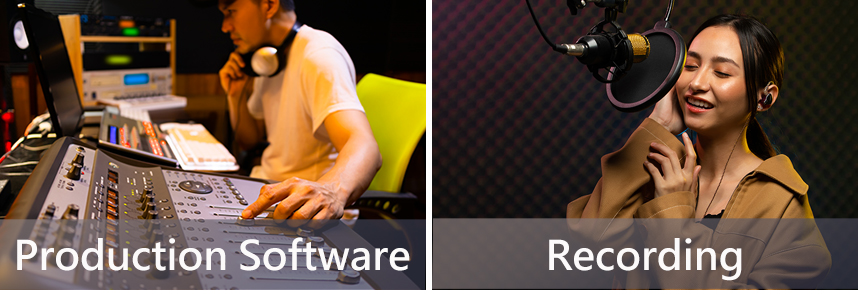
Digital Media Studio adopts a tapeless full HD video camera, which can provide high-definition signals for live TV broadcast and rebroadcast through industry-standard HD-SDI. the control room included a set of Sound Mixer. Students can learn sound mixing and editing while recording and post-production
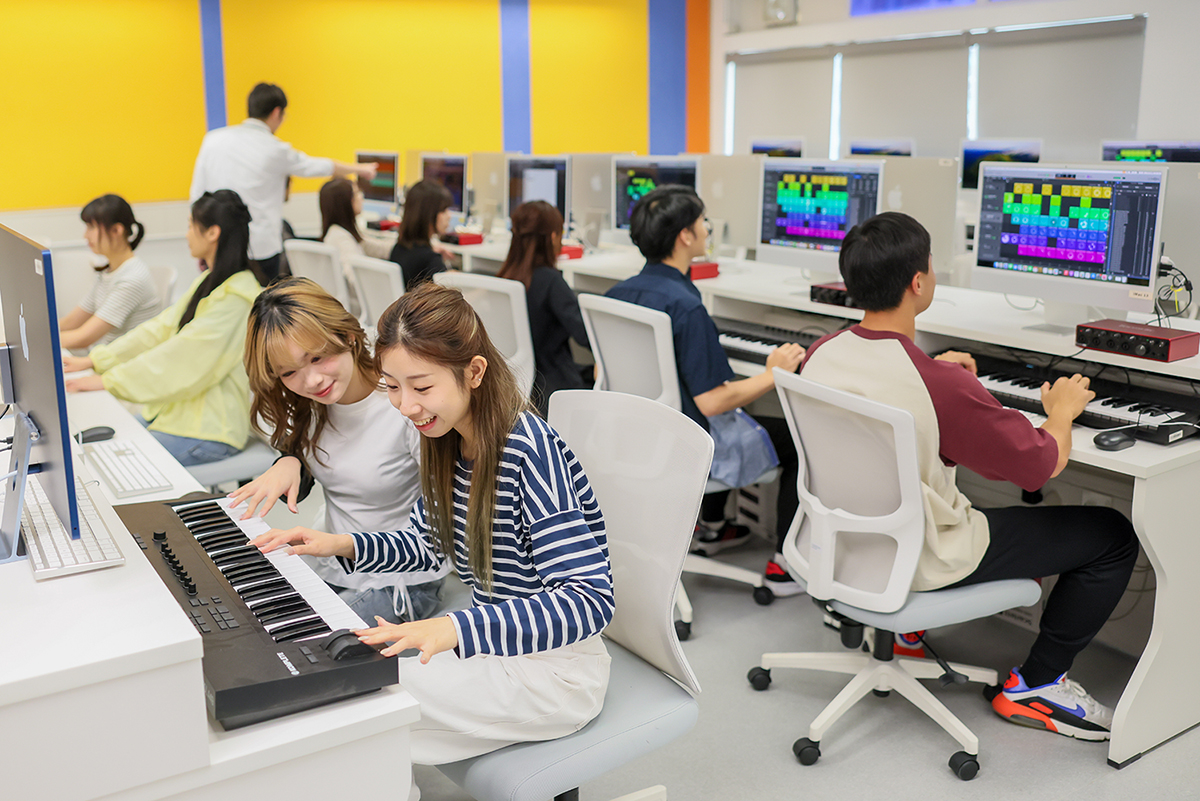
Music & Digital Audio Creative Studio equips with iMacs and provides the latest music production software. A range of recording equipment is also available, such as MIDI keyboards, audio interfaces, and condenser microphones, to teach students composition, arranging, sound design and production
The Audio Dubbing Studio equipped with various mixing and recording equipment, soundproofing room, and Audio Pro software that are commonly used in the industry
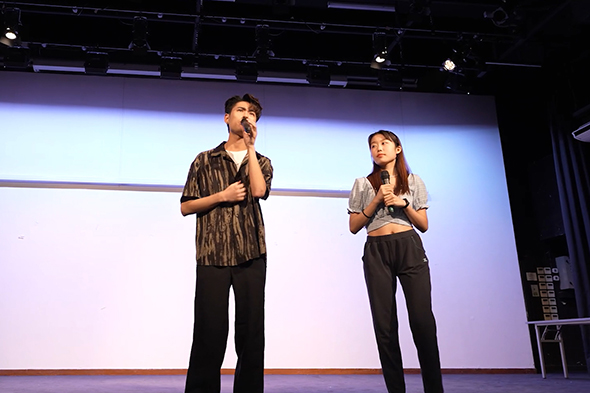
Auditorium is a venue where different large-scale events are held in HKCT
Professional Design Lab provides the advance computers with high speed networks and professional softwares, for examples, Logic Pro、ProTools and Ableton Live
Shaw Creative Hub provides professional production facilities such as Audio Mixing and VO Room for students to put their knowledge into practice
xx
Event Space of Shaw Creative Hub
MV shooting scene of Shaw Creative Hub 
MV shooting scene of Shaw Creative Hub

 
QF Level
The qualification of this programme is recognised under the Qualifications Framework in Hong Kong.
QF level:4
QR Registration No.:24/000449/L4
Registration Validity Period:1/9/2024 to 31/8/2027

Is studying music unrealistic?
New-generation music courses have transformed to emphasize applied technology and business practice. Studying music is no longer limited to "singing and playing the piano"; it is a professional skill combining creativity, engineering, and technology. During their studies, students master industry-standard production techniques. Driven by interest, learning is not only more effective, but upon graduation, students can also rely on a professional technical portfolio to directly address the massive market of the digital entertainment industry (including music, entertainment, games, and multimedia). While obtaining a qualification recognised by the Qualifications Framework, you also acquire irreplaceable professional credentials.

Are there pathways to enter the music industry?
Although there is no specific entry threshold for music creation, and self-media is prevalent (where some publish their own works online), the quality varies greatly, making it hard to stand out. Having connections provides a relative advantage for entering the industry. Enrolling in courses that offer internships at music-related organisations, industry visits, and sharing sessions by industry experts helps accumulate contacts and expand your network. Students can also cultivate innovative thinking and an international perspective through daily classes, train their music skills, and have the opportunity to participate in various performance activities and produce graduation concerts. This builds a personal music portfolio, which is of great help to future music career development.

What are the prospects for studying music?
Career Prospects: With the government keen to promote the "mega-event economy," the scope of jobs in the music and creative industries is widening, offering relatively more choices for those aspiring to join. Taking the "Higher Diploma in Music Production for Creative Industries" as an example, the course combines music composition, performance, stage production, and sound art. Graduates have a wide range of paths, such as composition and arrangement, sound design, mixing engineering, stage lighting and audio, music event production, and music therapy. One typically starts as a technician and seeks promotion after accumulating experience.
For Articulation: The course is recognised at Level 4 of the Qualifications Framework. Graduates can choose to continue their studies in their area of interest, considering bachelor's degree programmes related to music or creative media. It is a solid academic springboard.

Is it necessary to attend physical classes for music? How does it differ from self-study?
One can study music through systematic professional classes or accumulate experience via online self-study. However, the biggest difference between physical courses and online self-study is that physical attendance provides authentic personal experiences. For example, jamming and practising with a group of classmates who love music; visiting professional recording studios, music and entertainment companies, and performance venues in person; exchanging ideas with industry experts through seminars; and interning at music-related companies. These are experiences and insights that are difficult to absorb through personal online self-study.

Tuition fees and subsidies are to be reviewed and adjusted annually on various factors.